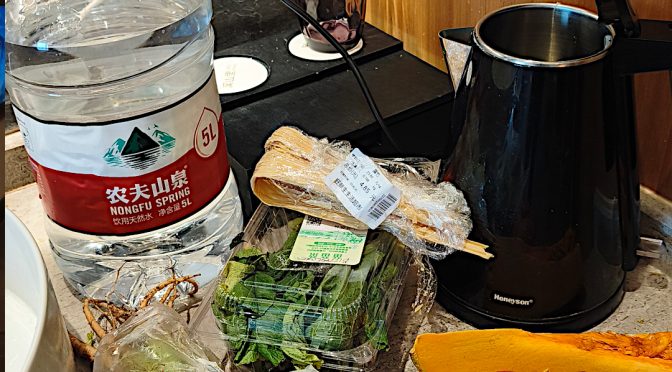
If you have, as Liam Neeson might say, “a unique set of dietary skills and requirements,” or if you want to know what’s in the food you eat and you simply don’t trust the local fare in your current nomadpreneur destination to be MSG-free and microwave-avoidant, then here’s a solution: Coffeepot Cooking! Just about every hotel–from 5-star to budget—and every hostel has one. All you need are local produce, a few supporting utensils and a little I-don’t-care-what people think-of-me attitude, and you’re on you’re way! Bon appétit!Join me on my return to China after 15 years! FREE: MY 2011 six-month China adventure: https://www.jamaicaninasia.com/china2011
Is it just me? Let me know if you’ve ever done anything similar!
As Rodney Dangerfield said, “Everything’s going according to plan. Not mine, but somebody’s plan!”
I’m sure the system and the plan works great for the powers that be, but not so much for foreigners whose accounts are in the US banking system! Here are the details of the paths and roadblocks I encounter here in cashless China!
Note: I am making some progress, so a future video will feature my tips and suggestions for successful navigation!
Dance, dance, dance! My feet keep dancin’! Let’s dance!
In an open area at Quinling Park (Monkey Park) in Guiyang, I saw a man renting out two sticks, each attached to a long string and bouncing ball at the end. While music plays, you swing the sticks on either side of your body keeping time with the music.
It’s called Shuaishuai Qiu (甩甩球), which translates to “Swinging Ball” or “Flinging Ball.” Depending on the region and the specific design of the equipment, it is also referred to as a modified “Meteor Ball” (流星球 – Liuxing Qiu) or an Elastic Fitness Ball (弹力健身球).
This is one of the vendors demonstrating how much fun one can have if you rent his swinging balls! Um…
According to AI: Qianling Park in Guiyang is famous not just for its wild macaque monkeys, but also for its incredibly vibrant, high-energy public fitness culture. Chinese city parks are hotbeds for creative, low-impact exercise inventions. Shuaishuai Qiu became a viral trend among park-goers because it is excellent for shoulder mobility, coordination, and upper-body joint flexibility—all wrapped up in a fun, musical game.
After 15 years outside the walls of China, I’m definitely noticing some things have stayed the same and some have changed. First, the “Great Firewall” is still in effect and blocks access to many non-Chinese internet platforms like Youtube and other video platforms, Gmail, Yahoo and even banking apps, Here’s what it is and how you can make a detour around, under and above it!
The “Great Firewall” affects not only your access to social media, but the functionality of your non-China debit/credit cards as well! f you intend to purchase anything while living or visiting, you’ll likely encounter a few challenges and even deliberate obstacles. This will likely be compounded by the fact that the entire Chinese society has gone digital! Here’s the first of a few tips on navigating China’s cashless society!
From my experience, the people in China are overwhelmingly friendly and refreshingly forward! But that’s just my experience! Your mileage may vary!
If you speak or understand Mandarin, let me know if Capcut’s translation feature got anything wrong!
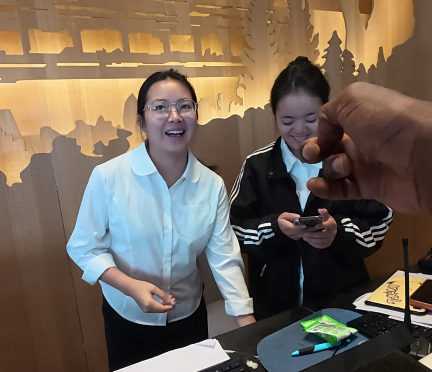
09号箱门已打开密码已失效:
Locker No. 09 has been opened;
the passcode is no longer valid.
你们两个会说中文吗:
Do you speak Chinese?
ME: 听不懂:
I don’t understand
听不懂听不懂哈哈哈你会讲的吗:
I don’t understand—hahaha
—can you speak it?
请您重复一下之前说过的话好吗:
Could you please repeat
what you said earlier?
我我说了你两个位置多好:
I told you how good your
two positions are
您正在确认地点:
You are confirming the location.
是的我们要去那家酒店:
Yes, we are going to that hotel.
西山夜景好:
The night view of the
Western Hills is beautiful.
西山夜景酒店是不是:
Is it the Xishan Night View Hotel?
你们喜欢我们这边的中文:
Do you like the Chinese
we use here?
我说帅哥你会会中文吗:
Hey handsome,
do you speak Chinese?
我会说普通话一点点啊:
I speak a little bit of Mandarin.
那你还可以的嘛:
You’re actually doing pretty well,
then—
你刚刚都会说的啊:
—you were able to say
it just a moment ago.
以后你就在我们中国找个媳妇:
In the future, you should find
yourself a wife here in China.
ME: 哦对不起听不懂哈哈哈:
Oh, sorry, I don’t understand—haha
我说你以后就在我们贵州:
I say, you should just stay here
in Guizhou from now on…
在我们贵州贵阳找个媳妇:
…finding a wife here in
Guiyang, Guizhou.
ME: 啊你叫什么名字啊:
Oh, what’s your name?
小帅哥请给我打个五星好评哈:
Hey handsome, please give
me a five-star review!
ME: 谢谢谢谢慢一点谢谢漂亮漂亮:
Thanks, thanks, Beautiful!
In an open area at Quinling Park (Monkey Park) in Guiyang, I saw a man renting out two sticks, each attached to a long string and bouncing ball at the end. While music plays, you swing the sticks on either side of your body keeping time with the music.
It’s called Shuaishuai Qiu (甩甩球), which translates to “Swinging Ball” or “Flinging Ball.” Depending on the region and the specific design of the equipment, it is also referred to as a modified “Meteor Ball” (流星球 – Liuxing Qiu) or an Elastic Fitness Ball (弹力健身球).
This is one of the vendors demonstrating how much fun one can have if you rent his swinging balls! Um…
According to AI: Qianling Park in Guiyang is famous not just for its wild macaque monkeys, but also for its incredibly vibrant, high-energy public fitness culture. Chinese city parks are hotbeds for creative, low-impact exercise inventions. Shuaishuai Qiu became a viral trend among park-goers because it is excellent for shoulder mobility, coordination, and upper-body joint flexibility—all wrapped up in a fun, musical game.
The front desk clerk here at my China hotel tells me that the hotel’s direct relationship is not with hotels.com or Agoda, but with Ctrip. So, when Hotels.com shows the hotel is booked (as it did even though I can see there’s low occupancy), Ctrip will show availability (as it does). Also, hotel reservations I made on other sites appear on my Trip.com account. It seems, therefore, that there are primary aggregators and then there are others that resell those primary relationships. Please elucidate without using “literal(ly)” or “exact same.”
AI RESPONDED:
Online travel booking platforms rely on a multi-tiered distribution network of wholesalers, bed banks, and B2B connectivity partners rather than maintaining direct contracts with every individual property.
How the Distribution Hierarchy Works
Direct Content Source: Regional giants like Ctrip (and its international brand, Trip.com) establish native software integrations and direct commercial agreements with domestic Chinese hotels, giving them primary control over local room inventory and real-time updates.
Secondary Resellers and Wholesalers: Western platforms like Hotels.com or Agoda often do not have local boots-on-the-ground contracting teams for every regional hotel in China. Instead, they buy room blocks downstream from global wholesalers or access inventory through API redistribution agreements tied to major regional suppliers like Ctrip.
Inventory Allotments: Hotels partition their total room count across different digital channels. A property might maintain a large, prioritized allotment pool for Ctrip while assigning a smaller, separate, or delayed quota to third-party distribution feeds used by western sites, creating discrepancies where one interface shows sold out while another displays open rooms.
Backend Consolidation: Because many secondary booking engines utilize shared global distribution systems or white-label supplier networks that route back to major Asian travel groups, reservations made on outside storefronts frequently resolve and log inside the primary fulfillment infrastructure of Trip.com Group.
If you’d like, I can explain how inventory sync delays happen or share tips for verifying third-party bookings with front desk staff before arrival.
Which other regional giants like Ctrip exist in China and across SE Asia that would guarantee me the lowest prices (I got my room for $27USD/night while even the hotel was charging me $55 if booked at the front desk) first for hotels and then for airline tickets (without using “literal(ly)” or “exact same”)?
Which other regional giants like Ctrip exist in China and across SE Asia that would guarantee me the lowest prices (I got my room for $27USD/night while even the hotel was charging me $55 if booked at the front desk) first for hotels and then for airline tickets? (without using literally or exact same)
6:41 AM
The pricing gap you encountered ($27 online vs. $55 at the front desk) stems from opaque contracted rates and volume-based inventory pooling. Local booking giants possess massive negotiating leverage with local suppliers, buying up rooms and airline blocks in bulk to secure prices that properties cannot match for individual walk-ins.
To replicate these savings across China and Southeast Asia, several prominent regional platforms hold the primary supply relationships:
🏨 Primary Hotel Gatekeepers
Meituan (China): While known internationally as a food delivery platform, Meituan is an immense domestic lifestyle app that dominates bookings for low-to-mid-tier Chinese hotels. They hold direct local partnerships outside major tourist hubs, regularly yielding the lowest available lodging rates. [1, 2]
Fliggy (China): Operated by Alibaba, Fliggy operates as a marketplace where hotels manage their storefronts directly. By bypassing secondary wholesale distributors, it frequently undercuts Western search engines for properties inside mainland China. [1]
Agoda (Southeast Asia): Headquartered in Singapore, Agoda acts as the primary accommodation supplier for the broader Asian market. They source rooms natively across Thailand, Vietnam, and the Philippines, positioning them to distribute rates that beat global competitors. [1, 2, 3]
Traveloka (Southeast Asia): Originating in Indonesia, this regional powerhouse dominates hotel fulfillment across the ASEAN region. Because they specialize heavily in localized inventory rather than global aggregates, they bypass international wholesale markups. [1, 2]
✈️ Primary Airline Ticket Gatekeepers
Qunar (China): As an independent brand within the Trip.com Group family, Qunar focuses heavily on domestic and discount aviation ticketing inside China. It functions as a primary repository for low-tier flight inventory, often beating international flight finders on regional routes.
AirAsia MOVE / Superapp (Southeast Asia): Rather than operating merely as a low-cost carrier, AirAsia’s app functions as an Online Travel Agency (OTA) that integrates direct flight routing with more than 700 partner airlines. Sourcing regional flights directly through their internal framework removes the mid-level ticketing fees applied by global ticket consolidators.
Tiket.com (Southeast Asia): An Indonesian travel agency that holds a major footprint in regional aviation ticketing. They secure direct ticketing feeds with domestic Southeast Asian carriers, making them a highly competitive option for localized air travel
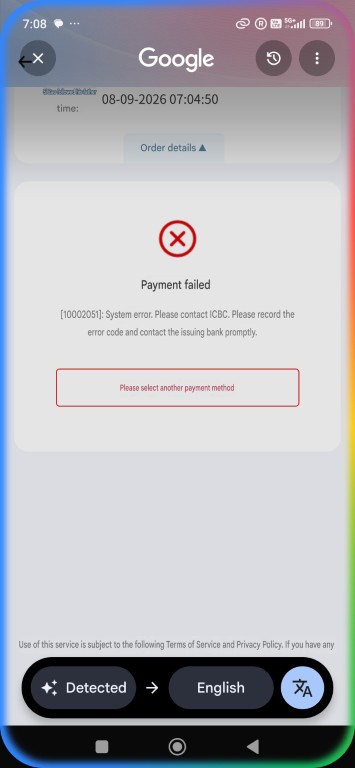
Okay. So, the first major difference I’m experiencing here in China is that it’s a bit more challenging to use my US debit/credit cards–particularly online.
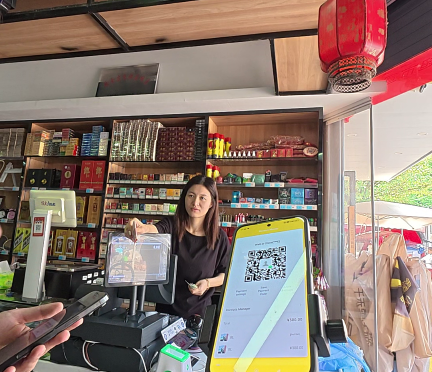
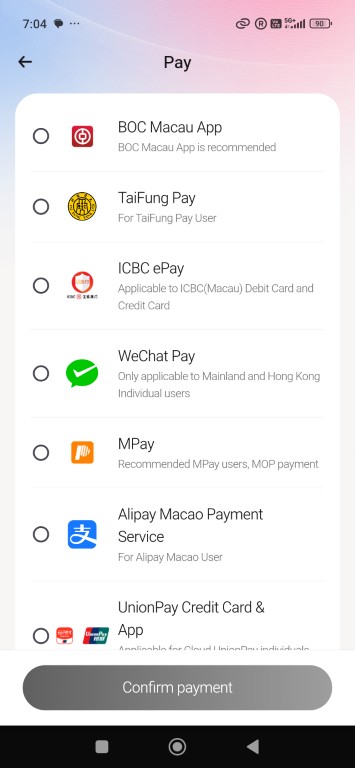
Here in China, less and less people use cash (actual physical currency). Most everyone–young and older–uses digital systems (WeChat, Mpay, Alipay, etc.) and those systems are not so friendly to non-China debit/credit cards like mine that are not attached to China bank accounts.
So, a simple task like topping up a SIM card to make a call back to Saipan requires getting other people involved.
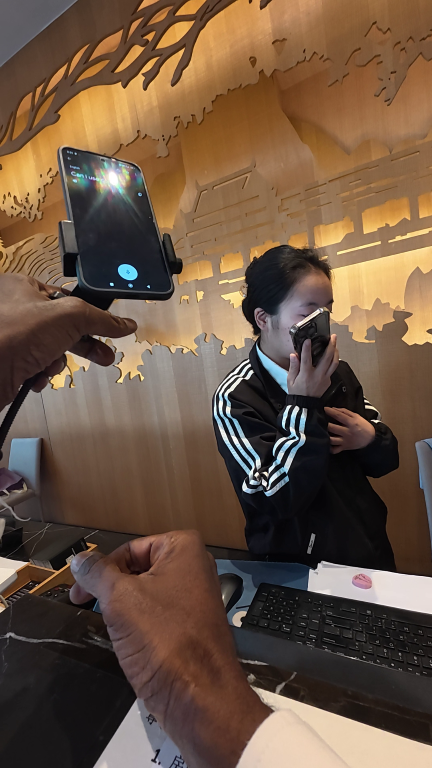
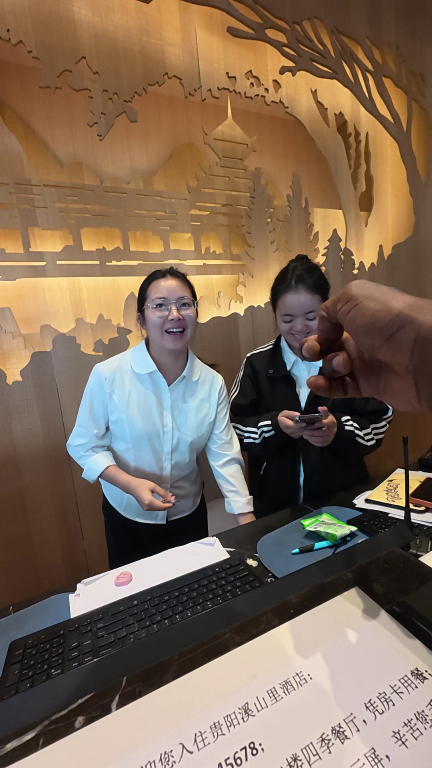
For example, the front desk clerk at the hotel in Guiyang helped me set up a WeChat account (new members need to be pulled in by an existing member), but I can’t fund it because my US-based card is not accepted. I got as far as registering the card, but the option grayed out and doesn’t allow the funding option. Dead end.
When I needed to hail a taxi with a ride-hailing app (that same clerk recommended Didi) I tried to set up that app, but again, only China bank account holders can register payment methods. Dead end.
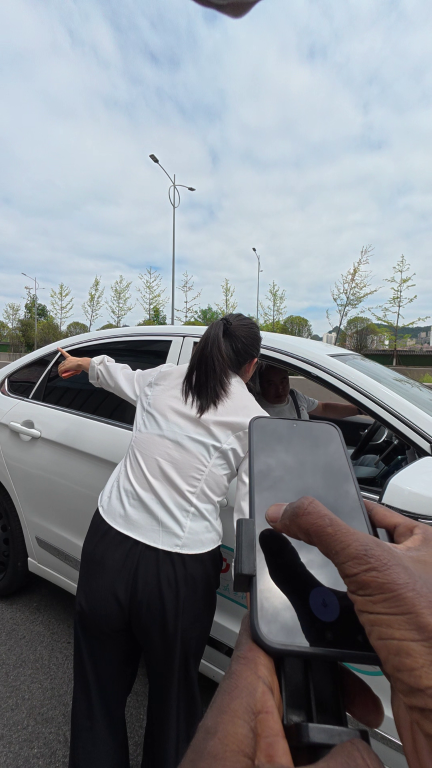
She ended up securing the taxi with her own Didi account and walked with me out to the curb when it arrived to make sure the driver knew I wanted to go to Walmart (yes, I said, “Walmart!” That’s another story!)
So, as an alternative, I had a friend who lives in Macau ask another friend to send me 20RMB. That worked out okay. However, I’m finding that most folks I run into who have WeChat, don’t use it for purchases so they don’t have balances and would need to connect a bank account. So, anyway, that worked out okay and I had 20RMB in my WeChat account!
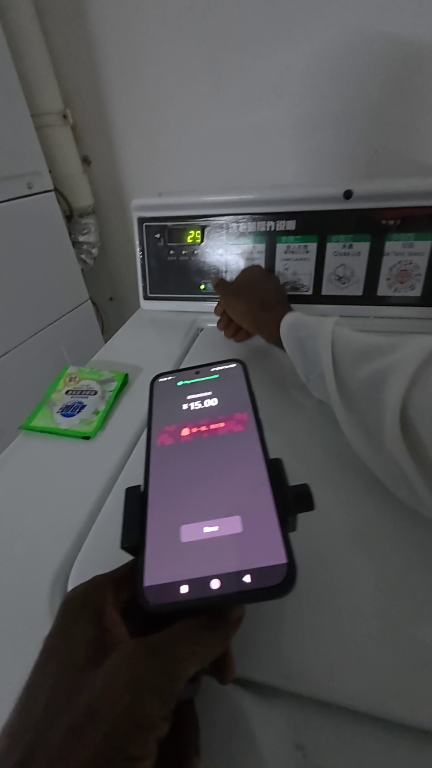
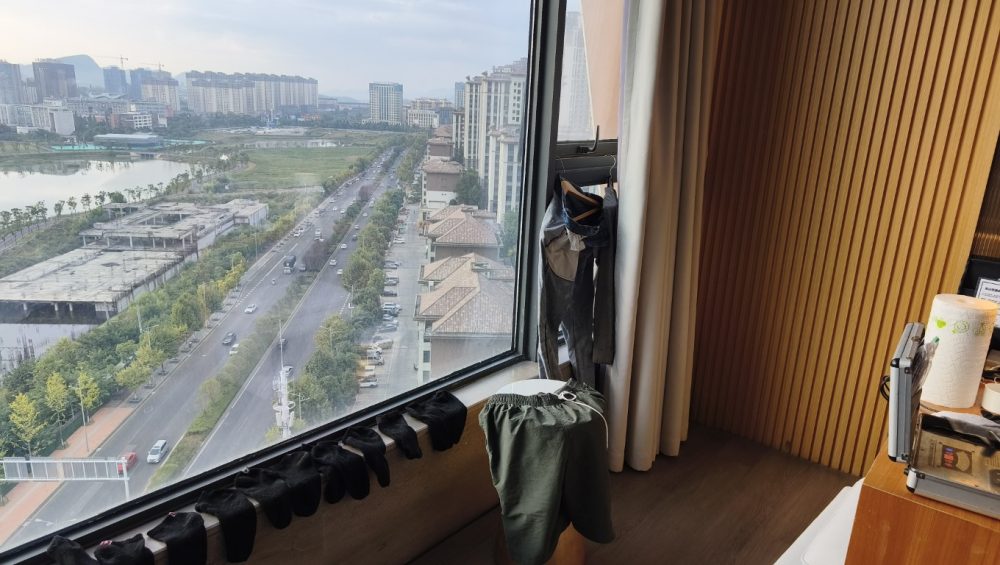
The next day, with my newly-aquired wealth, I wanted to do my laundry in the basement of the hotel, but the machines only accept digital payment methods. Fortunately, with the 20RMB on my WeChat account, I was able to pay the 15RMB for the washer…..
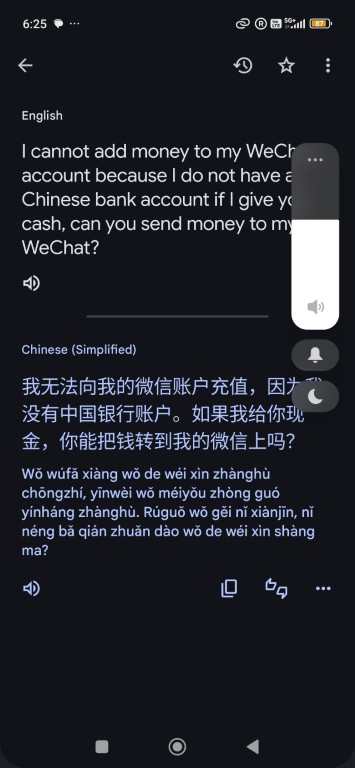
…but I couldn’t pay the 15RMB for the dryer. So, I asked another front desk clerk to send me 50RMB and I would pay her cash. (Incidentally, all my communications here in Guiyang are enabled via WeChat in a comical back and forth dance–Chinese citizen speaks Mandarin into his/her translation-app-enabled smartphone, then shows or plays me the English translation; then I speak English into my GoogleTranslate-enabled smartphone and show or play Chinese citizen the Chinese translation.)
She tried to send me the money but received and showed me an error message that was something like “Due to unusual activity on this user’s account (mine), the user’s account is restricted.” So, I had to hang dry my clothes! Partial success!
A friend in Kazakhstan said there have, in fact, been increased restrictions and many foreigners abroad (US citizens and other) even in places like Thailand are experiencing difficulties using their US-banking system cards. He cited SWIFT changes and tighter restrictions on the US side as contributing factors.
In any case, once I discover the best workaround, I’ll share here on this blog and the @jamaicaninasia Youtube channel for the benefit of other nomadpreneurs!
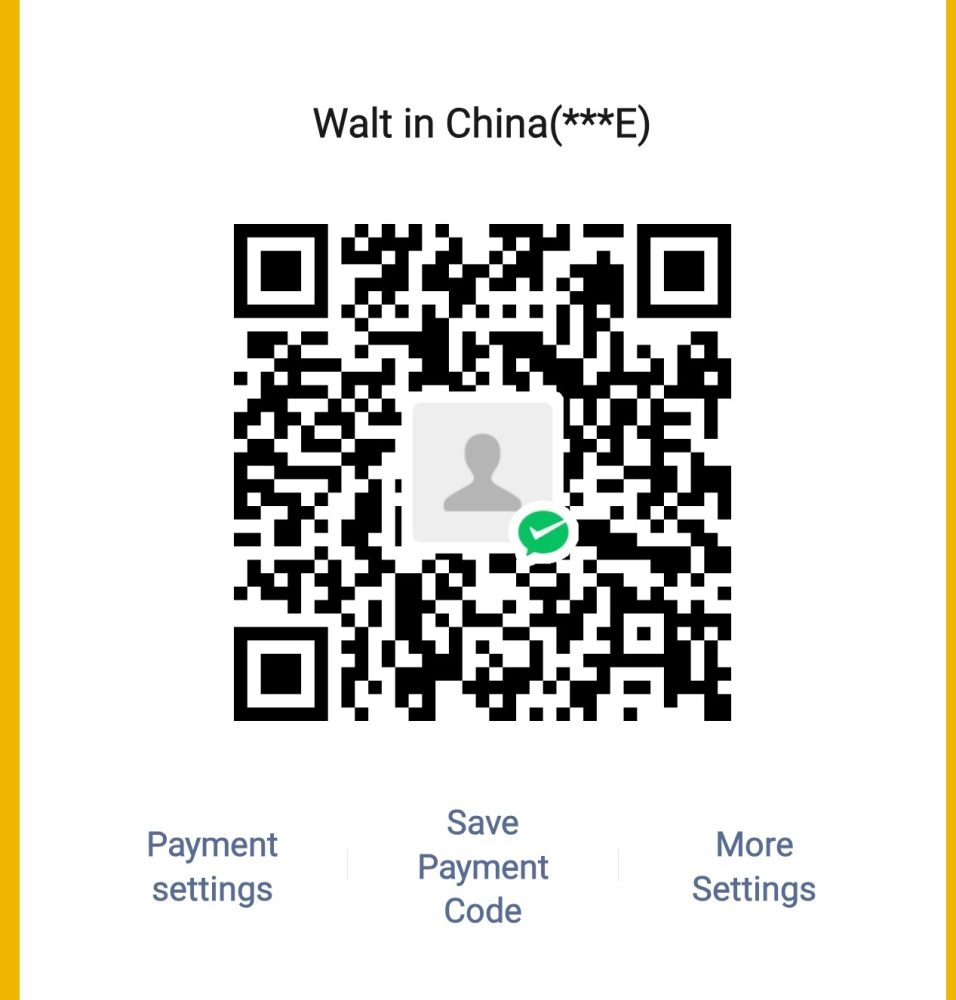
Meanwhile, if you have a WeChat account AND want to help me do my laundry (I think that will be a public good and a net benefit for all who come near me ), here’s my WeChat QR code for sponsoring laundry day! (Exchange rate: 1USD = 6.71RMB)
.
Meanwhile, stay tuned for more fun adventures including
“The Most Challenging Thing to Find in China That’s Everywhere in the US (and even on Saipan!)”
“She Wouldn’t Take My Money No Matter How Hard I Tried”
“This Produce Looks TOO Perfect Here in China. I Think I Know What’s Going On Here!”
Quite a lot has changed since my 2011 six-month adventure! You can see it all here on the blog! As I prepare to return 15 years later, the uncertainty grows. Will I be received the same? What has changed. What are the friends I made doing now? Will I be able to find them?
Youtube is blocked in China. Yes, there are ways to get around that, but your best bet to join in the adventure is to join the mailing list at https://www.jamaicaninchina.com/subscribe . It’s free! (If you’re reading this via email notification, you’re already on the list!)





 .
.