
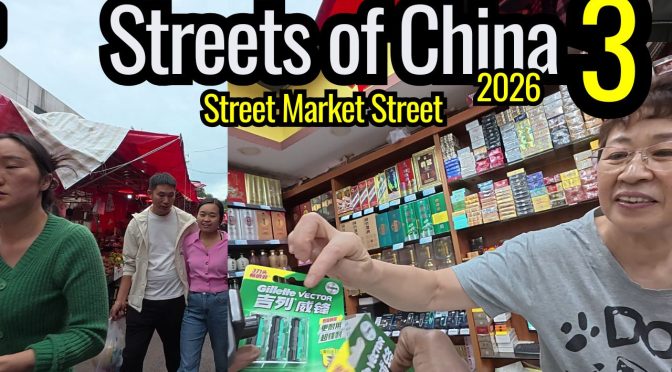
I moved to a different hotel to be closer to the airport in advance of my next trip! It’s in the downtown area, so fresh vegetables and stores (with rice noodles!) are more available! And folks are just as friendly here, too!
Tag Archives: China
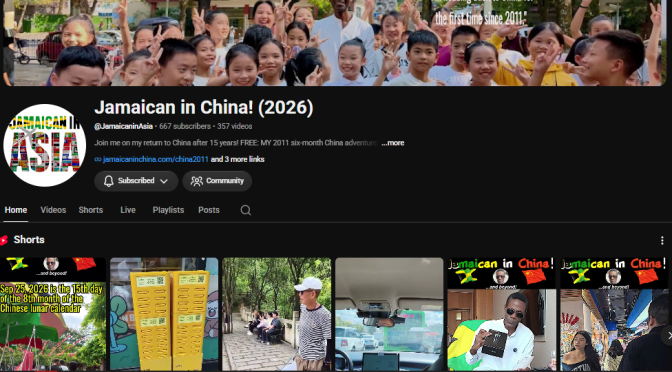
My Favorite Shot in China so Far

An unplanned, un-choreographed, unrehearsed 20-second interaction with kids and their spontaneous reactions to that stranger who walked by the schoolyard one Tuesday afternoon…is now my favorite shot in China!
This is my life.
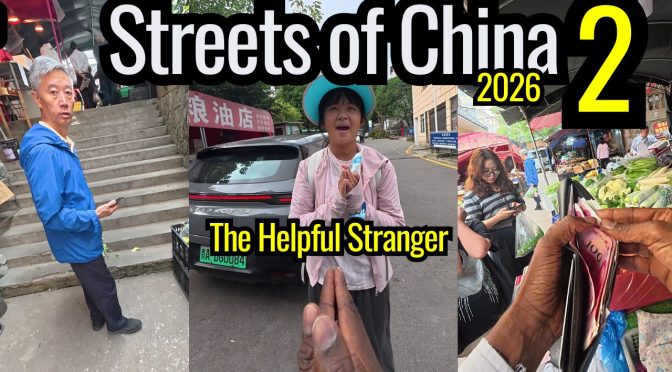
Helpful Strangers & What $12US Buys at the Morning Market
I arrived in China, Guiyang on a late night flight. Check out what $27USD/night gets you in China!) The next morning, I ventured out to explore the surroundings. Here’s how that adventure went!
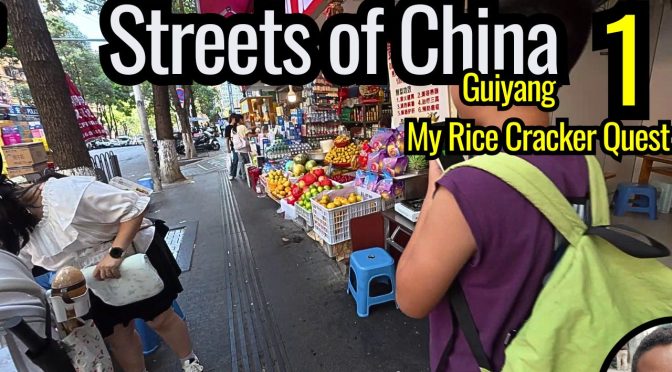
Streets of China 1: The Great Rice Cracker Quest!
You’d be surprised just how challenging it is to find a pack of plain, white rice crackers here in China, Guiyang. Intrigue ensues!
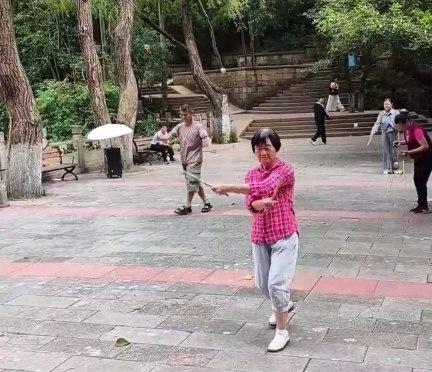
China Jam in a Jam & Born to Dance, the Prequel!
60 seconds of a jam while sitting in a traffic jam.
If you enjoyed the first Born to Dance, then here’s what happened a few moments before that popular sequence:

Here’s What $50USD Buys You in China
Here’s another peek into how far your US dollars can stretch in China! These are the things I need in order to achieve “Nomad Normal”–cross-border continuity in my daily routine, health habits, dietary preferences and business tasks.

Meet Olivia! My Yelang Valley Guide
My Taobao delivery savior, Olivia, along with hotel manager Wenrong offered to take me to see one of Guiyang’s popular attractions–Yelong Valley–a stone fortress conceived and constructed by a local artist and residents over a 20-year period. Let’s enjoy the day together!
If you can’t view the video above, watch it here:
Here’s a little about the Beiyu people of which Olivia is a part:
The Buyi (also spelled Bouyei or Puyi) ethnic group is an ancient agricultural community of about 3.5 million people living mostly in southwestern China. [1, 2]
Where They Live
- Main Province: Most Buyi people live in Guizhou province, especially in areas like Anshun, Guiyang, and the Qiannan and Qianxinan autonomous prefectures.
History and Farming
- Rice Culture: The Buyi have farmed rice in river valleys and plateaus for over 2,000 years. People often call them the “Rice Ethnos”.
Culture and Crafts
- Batik Art: The Buyi are famous for their traditional indigo-dyed batik fabrics featuring complex, symbolic patterns.
- Festivals: Major celebrations include the Third Day of the Third Lunar Month (worshiping land and mountain gods) and the Sixth Day of the Sixth Lunar Month (honoring field and earth spirits).

I Asked For Directions…Here’s What Happened
What started with a visit to an electronics mall in Guiyang, China turned into an unexpected 8-minute walk through the streets, escalators and underground shopping malls of the city with a new friend.
After buying some electronics at Naobaixin Digital World (脑百信数码世界), my friend Ron and I asked a local vendor how to get to a popular supermarket. Using Google Translate to communicate, he offered to walk us there himself. Along the way, we explored Guiyang’s streets and underground malls—and different strangers stopped to say hello and ask where we were from. When they learned we were from Jamaica.
We eventually reached the supermarket, said goodbye, exchanged phone numbers and took photos together.
Come along for this unscripted walk through Guiyang, China—and see how a simple question about directions turned into an unexpected encounter with local people and everyday life in Guiyang.
#Guiyang #China #GuiyangChina #ChinaTravel #WalkingTour #JamaicanInAsia
https://youtu.be/Phs1vOJ9X4k
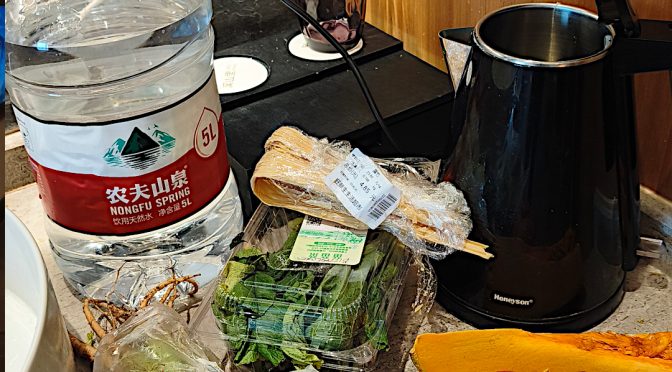
Coffeepot Cooking in 2026 China!
If you have, as Liam Neeson might say, “a unique set of dietary skills and requirements,” or if you want to know what’s in the food you eat and you simply don’t trust the local fare in your current nomadpreneur destination to be MSG-free and microwave-avoidant, then here’s a solution: Coffeepot Cooking! Just about every hotel–from 5-star to budget—and every hostel has one. All you need are local produce, a few supporting utensils and a little I-don’t-care-what people think-of-me attitude, and you’re on you’re way! Bon appétit!Join me on my return to China after 15 years! FREE: MY 2011 six-month China adventure: https://www.jamaicaninasia.com/china2011
Is it just me? Let me know if you’ve ever done anything similar!

The Labyrinthine Maze That is Cashless China!
As Rodney Dangerfield said, “Everything’s going according to plan. Not mine, but somebody’s plan!”

I’m sure the system and the plan works great for the powers that be, but not so much for foreigners whose accounts are in the US banking system! Here are the details of the paths and roadblocks I encounter here in cashless China!
Note: I am making some progress, so a future video will feature my tips and suggestions for successful navigation!
Why My Luxury Hotel is $27USD per Night
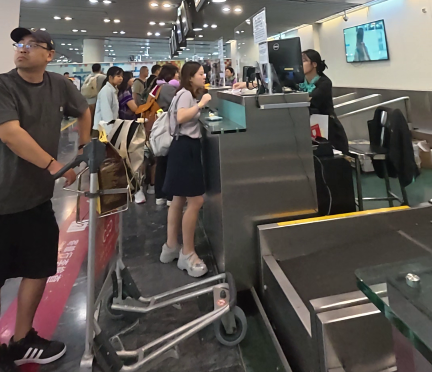
The front desk clerk here at my China hotel tells me that the hotel’s direct relationship is not with hotels.com or Agoda, but with Ctrip. So, when Hotels.com shows the hotel is booked (as it did even though I can see there’s low occupancy), Ctrip will show availability (as it does). Also, hotel reservations I made on other sites appear on my Trip.com account. It seems, therefore, that there are primary aggregators and then there are others that resell those primary relationships. Please elucidate without using “literal(ly)” or “exact same.”
AI RESPONDED:
Online travel booking platforms rely on a multi-tiered distribution network of wholesalers, bed banks, and B2B connectivity partners rather than maintaining direct contracts with every individual property.
How the Distribution Hierarchy Works
-
- Direct Content Source: Regional giants like Ctrip (and its international brand, Trip.com) establish native software integrations and direct commercial agreements with domestic Chinese hotels, giving them primary control over local room inventory and real-time updates.
- Secondary Resellers and Wholesalers: Western platforms like Hotels.com or Agoda often do not have local boots-on-the-ground contracting teams for every regional hotel in China. Instead, they buy room blocks downstream from global wholesalers or access inventory through API redistribution agreements tied to major regional suppliers like Ctrip.
- Inventory Allotments: Hotels partition their total room count across different digital channels. A property might maintain a large, prioritized allotment pool for Ctrip while assigning a smaller, separate, or delayed quota to third-party distribution feeds used by western sites, creating discrepancies where one interface shows sold out while another displays open rooms.
- Backend Consolidation: Because many secondary booking engines utilize shared global distribution systems or white-label supplier networks that route back to major Asian travel groups, reservations made on outside storefronts frequently resolve and log inside the primary fulfillment infrastructure of Trip.com Group.
If you’d like, I can explain how inventory sync delays happen or share tips for verifying third-party bookings with front desk staff before arrival.
Which other regional giants like Ctrip exist in China and across SE Asia that would guarantee me the lowest prices (I got my room for $27USD/night while even the hotel was charging me $55 if booked at the front desk) first for hotels and then for airline tickets (without using “literal(ly)” or “exact same”)?
Which other regional giants like Ctrip exist in China and across SE Asia that would guarantee me the lowest prices (I got my room for $27USD/night while even the hotel was charging me $55 if booked at the front desk) first for hotels and then for airline tickets? (without using literally or exact same)
6:41 AM
The pricing gap you encountered ($27 online vs. $55 at the front desk) stems from opaque contracted rates and volume-based inventory pooling. Local booking giants possess massive negotiating leverage with local suppliers, buying up rooms and airline blocks in bulk to secure prices that properties cannot match for individual walk-ins.
To replicate these savings across China and Southeast Asia, several prominent regional platforms hold the primary supply relationships:
🏨 Primary Hotel Gatekeepers
-
- Meituan (China): While known internationally as a food delivery platform, Meituan is an immense domestic lifestyle app that dominates bookings for low-to-mid-tier Chinese hotels. They hold direct local partnerships outside major tourist hubs, regularly yielding the lowest available lodging rates. [1, 2]
- Fliggy (China): Operated by Alibaba, Fliggy operates as a marketplace where hotels manage their storefronts directly. By bypassing secondary wholesale distributors, it frequently undercuts Western search engines for properties inside mainland China. [1]
- Agoda (Southeast Asia): Headquartered in Singapore, Agoda acts as the primary accommodation supplier for the broader Asian market. They source rooms natively across Thailand, Vietnam, and the Philippines, positioning them to distribute rates that beat global competitors. [1, 2, 3]
- Traveloka (Southeast Asia): Originating in Indonesia, this regional powerhouse dominates hotel fulfillment across the ASEAN region. Because they specialize heavily in localized inventory rather than global aggregates, they bypass international wholesale markups. [1, 2]
✈️ Primary Airline Ticket Gatekeepers
- Qunar (China): As an independent brand within the Trip.com Group family, Qunar focuses heavily on domestic and discount aviation ticketing inside China. It functions as a primary repository for low-tier flight inventory, often beating international flight finders on regional routes.
- AirAsia MOVE / Superapp (Southeast Asia): Rather than operating merely as a low-cost carrier, AirAsia’s app functions as an Online Travel Agency (OTA) that integrates direct flight routing with more than 700 partner airlines. Sourcing regional flights directly through their internal framework removes the mid-level ticketing fees applied by global ticket consolidators.
- Tiket.com (Southeast Asia): An Indonesian travel agency that holds a major footprint in regional aviation ticketing. They secure direct ticketing feeds with domestic Southeast Asian carriers, making them a highly competitive option for localized air travel
Follow the adventure in real time on the @JamaicaninAsia Youtube Channel!

Reload My 6-Month China Adventure!
A few years ago, I embarked on a unique adventure and spent 6 months doing the nomad thing from Saipan, several cities throughout China, as well as in Laos and Singapore! I had a great time, met a lot of great people, and chronicled it through email updates to my mailing list of followers! With travel restrictions now in effect, I’ve created a weekly email to give YOU a chance to re-live the adventure just as if you were there! Simply sign up to the Jamaican in China “Reloaded” email, then sit back and enjoy the ride in your email inbox every three or so days!
CLICK HERE to re-live the adventure in your email inbox!

CLICK HERE to re-live the adventure in your email inbox!
and/or download the entire Guess Who’s Coming to Dim Sum PDF