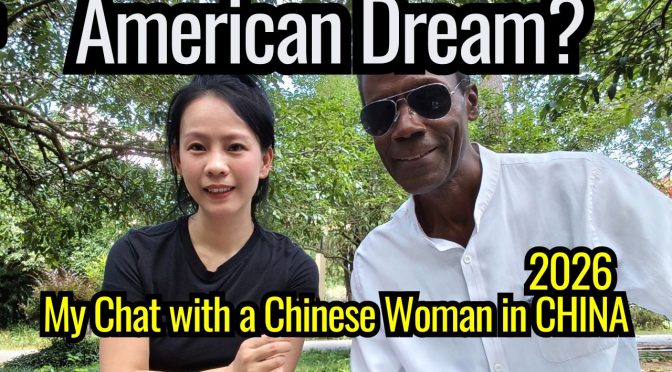
Here’s my interview with Olivia Lu while we were in Huaxin Park, Guiyang.
*This reflects China’s national financial aid policy for domestic full-time postgraduate students.
While tuition fees vary based on the university and program type, a typical full-time Master’s degree at a public university in China costs around 8,000 to 10,000 Yuan per year (usually split into 4,000 to 5,000 Yuan per semester). If a candidate is nrolled in a specialized professional Master’s program (such as an MBA or a specialized arts degree), tuition can easily reach 10,000 Yuan per semester. [1, 2, 3]
The reimbursement mechanism she mentioned refers to the National Postgraduate Operational Subsidy (国家助学金), which is a universal baseline stipend funded by the Chinese central government. [1]
Breakdown of the Subsidy
The Amount: The Chinese government mandates a universal baseline subsidy of 6,000 Yuan per year for all eligible full-time Master’s students. [1]
How It Is Paid: Rather than a one-time refund or tuition discount, this money is disbursed directly into the student’s bank account as a monthly stipend. Most universities distribute it as 600 Yuan per month over 10 academic months, though some split it into 500 Yuan over 12 months. [1, 2]
Eligibility: This is available to all full-time Chinese domestic graduate students whose profiles do not include an active salary or alternative full employment. [1]
Beyond this basic 6,000 Yuan government stipend, most Chinese public universities also offer automatic “Institutional Academic Scholarships” (学业奖学金). Depending on the student’s performance, these merit-based layers can cover anywhere from 40% to 100% of the remaining tuition costs, making it very common for domestic graduate studies in China to be heavily or entirely subsidized. [1]
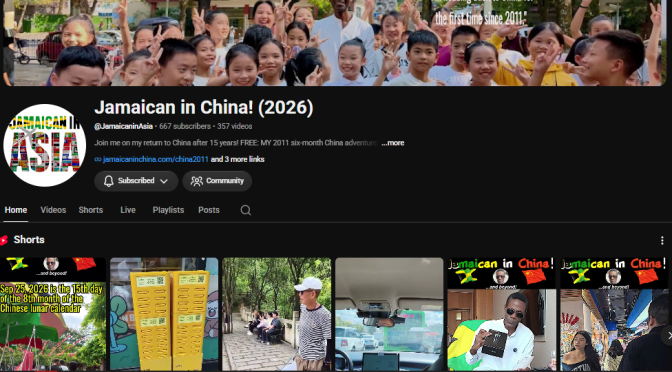
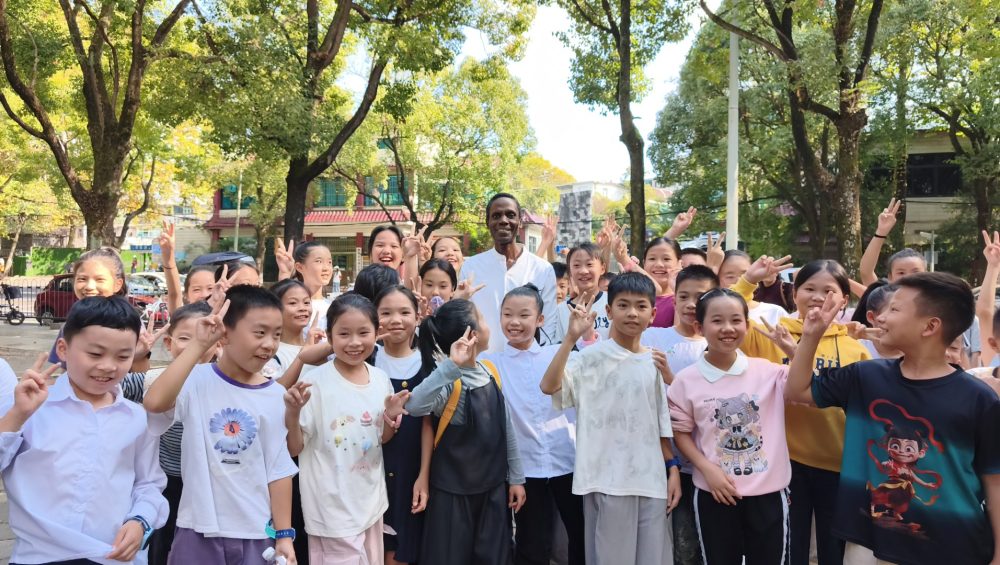
An unplanned, un-choreographed, unrehearsed 20-second interaction with kids and their spontaneous reactions to that stranger who walked by the schoolyard one Tuesday afternoon…is now my favorite shot in China!
I arrived in China, Guiyang on a late night flight. Check out what $27USD/night gets you in China!) The next morning, I ventured out to explore the surroundings. Here’s how that adventure went!
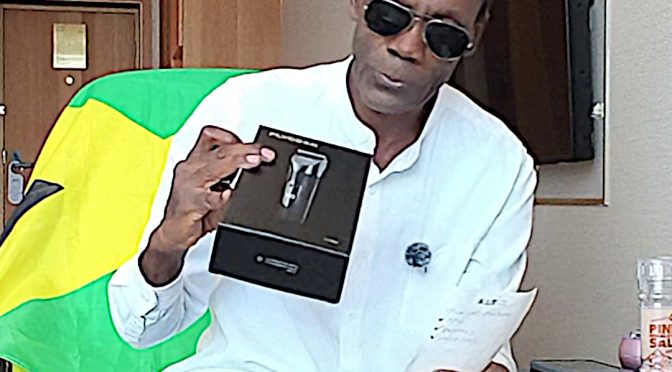
Here’s another peek into how far your US dollars can stretch in China! These are the things I need in order to achieve “Nomad Normal”–cross-border continuity in my daily routine, health habits, dietary preferences and business tasks.
My Taobao delivery savior, Olivia, along with hotel manager Wenrong offered to take me to see one of Guiyang’s popular attractions–Yelong Valley–a stone fortress conceived and constructed by a local artist and residents over a 20-year period. Let’s enjoy the day together!
If you can’t view the video above, watch it here:
Here’s a little about the Beiyu people of which Olivia is a part:
The Buyi (also spelled Bouyei or Puyi) ethnic group is an ancient agricultural community of about 3.5 million people living mostly in southwestern China. [1, 2]
Where They Live
Main Province: Most Buyi people live in Guizhou province, especially in areas like Anshun, Guiyang, and the Qiannan and Qianxinan autonomous prefectures.
Other Areas: Smaller groups live in neighboring Yunnan and Sichuan provinces, as well as parts of northern Vietnam. [1, 2, 3]
History and Farming
Rice Culture: The Buyi have farmed rice in river valleys and plateaus for over 2,000 years. People often call them the “Rice Ethnos”.
Language: They speak a Tai-kadai language that is closely related to the Zhuang language. Most Buyi people also speak Mandarin Chinese. [1, 2, 3, 4]
Culture and Crafts
Batik Art: The Buyi are famous for their traditional indigo-dyed batik fabrics featuring complex, symbolic patterns.
Festivals: Major celebrations include the Third Day of the Third Lunar Month (worshiping land and mountain gods) and the Sixth Day of the Sixth Lunar Month (honoring field and earth spirits).
Music: Folk songs are passed down orally to record their history, tell stories, and celebrate weddings or festivals. [1, 2, 3, 4]
What started with a visit to an electronics mall in Guiyang, China turned into an unexpected 8-minute walk through the streets, escalators and underground shopping malls of the city with a new friend.
After buying some electronics at Naobaixin Digital World (脑百信数码世界), my friend Ron and I asked a local vendor how to get to a popular supermarket. Using Google Translate to communicate, he offered to walk us there himself. Along the way, we explored Guiyang’s streets and underground malls—and different strangers stopped to say hello and ask where we were from. When they learned we were from Jamaica.
We eventually reached the supermarket, said goodbye, exchanged phone numbers and took photos together.
Come along for this unscripted walk through Guiyang, China—and see how a simple question about directions turned into an unexpected encounter with local people and everyday life in Guiyang.
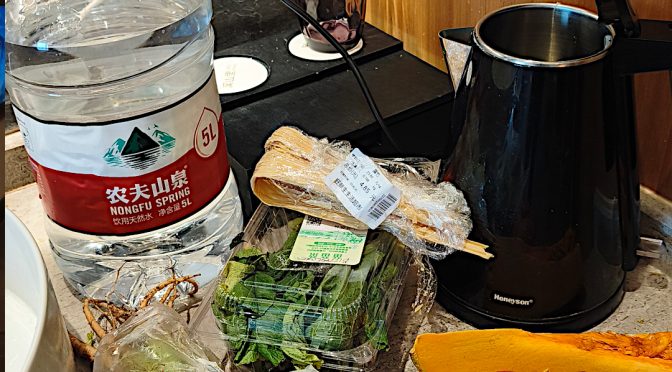
If you have, as Liam Neeson might say, “a unique set of dietary skills and requirements,” or if you want to know what’s in the food you eat and you simply don’t trust the local fare in your current nomadpreneur destination to be MSG-free and microwave-avoidant, then here’s a solution: Coffeepot Cooking! Just about every hotel–from 5-star to budget—and every hostel has one. All you need are local produce, a few supporting utensils and a little I-don’t-care-what people think-of-me attitude, and you’re on you’re way! Bon appétit!Join me on my return to China after 15 years! FREE: MY 2011 six-month China adventure: https://www.jamaicaninasia.com/china2011
Is it just me? Let me know if you’ve ever done anything similar!
As Rodney Dangerfield said, “Everything’s going according to plan. Not mine, but somebody’s plan!”
I’m sure the system and the plan works great for the powers that be, but not so much for foreigners whose accounts are in the US banking system! Here are the details of the paths and roadblocks I encounter here in cashless China!
Note: I am making some progress, so a future video will feature my tips and suggestions for successful navigation!
Dance, dance, dance! My feet keep dancin’! Let’s dance!
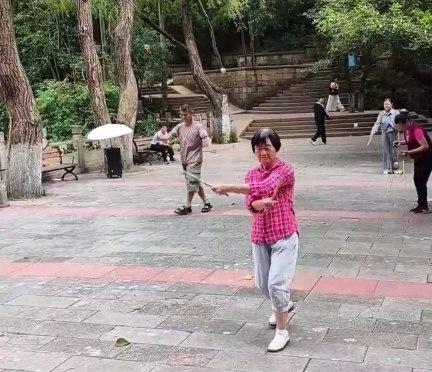
In an open area at Quinling Park (Monkey Park) in Guiyang, I saw a man renting out two sticks, each attached to a long string and bouncing ball at the end. While music plays, you swing the sticks on either side of your body keeping time with the music.
It’s called Shuaishuai Qiu (甩甩球), which translates to “Swinging Ball” or “Flinging Ball.” Depending on the region and the specific design of the equipment, it is also referred to as a modified “Meteor Ball” (流星球 – Liuxing Qiu) or an Elastic Fitness Ball (弹力健身球).
This is one of the vendors demonstrating how much fun one can have if you rent his swinging balls! Um…
According to AI: Qianling Park in Guiyang is famous not just for its wild macaque monkeys, but also for its incredibly vibrant, high-energy public fitness culture. Chinese city parks are hotbeds for creative, low-impact exercise inventions. Shuaishuai Qiu became a viral trend among park-goers because it is excellent for shoulder mobility, coordination, and upper-body joint flexibility—all wrapped up in a fun, musical game.